Articles
Guides and tutorials about IMEI numbers, device identification, and mobile security.
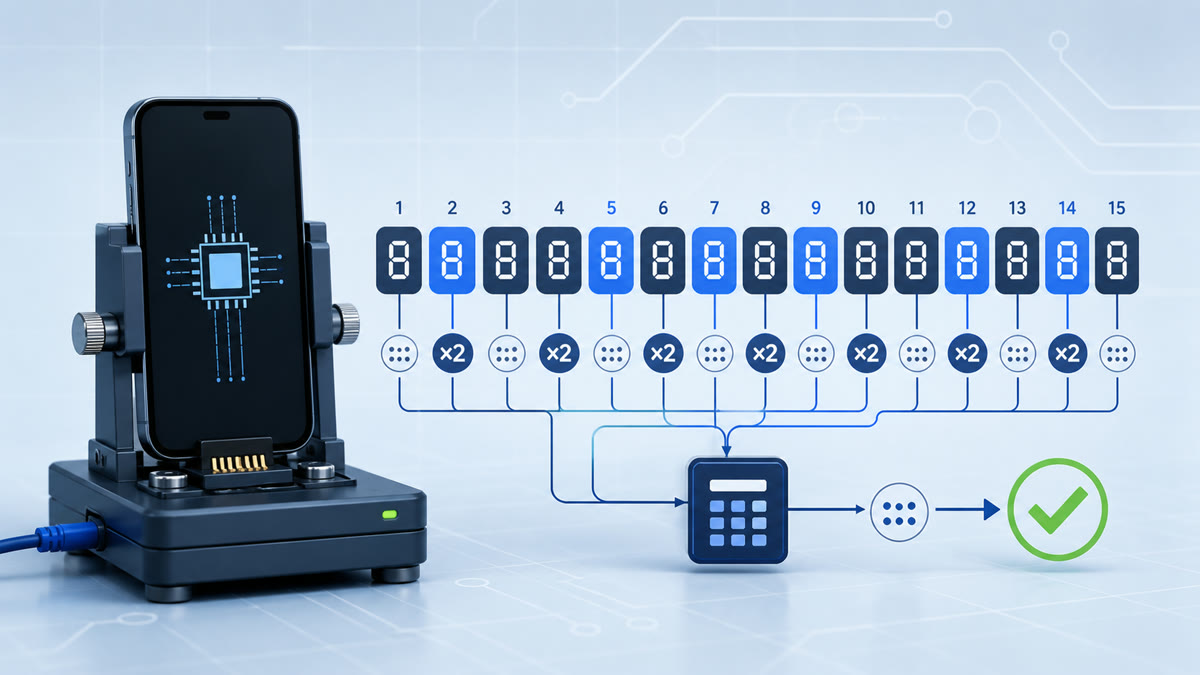
How to Check if an IMEI Is Valid (Luhn Algorithm Explained)
Check the 15-digit IMEI format and Luhn checksum with a worked example and QA vectors. This test does not verify assignment, ownership or blacklist status.

What Is a TAC (Type Allocation Code)? IMEI's First 8 Digits
The TAC is the first 8 digits of an IMEI and can be mapped to an allocated device type through authoritative data. Learn how allocation and lookup differ.

Bulk IMEI Testing: Batches, Luhn Checks & QA Automation
Generate batches of up to 50 Luhn-valid test values with RandomIMEI.com, or build a local deduplicated generator for larger QA datasets.
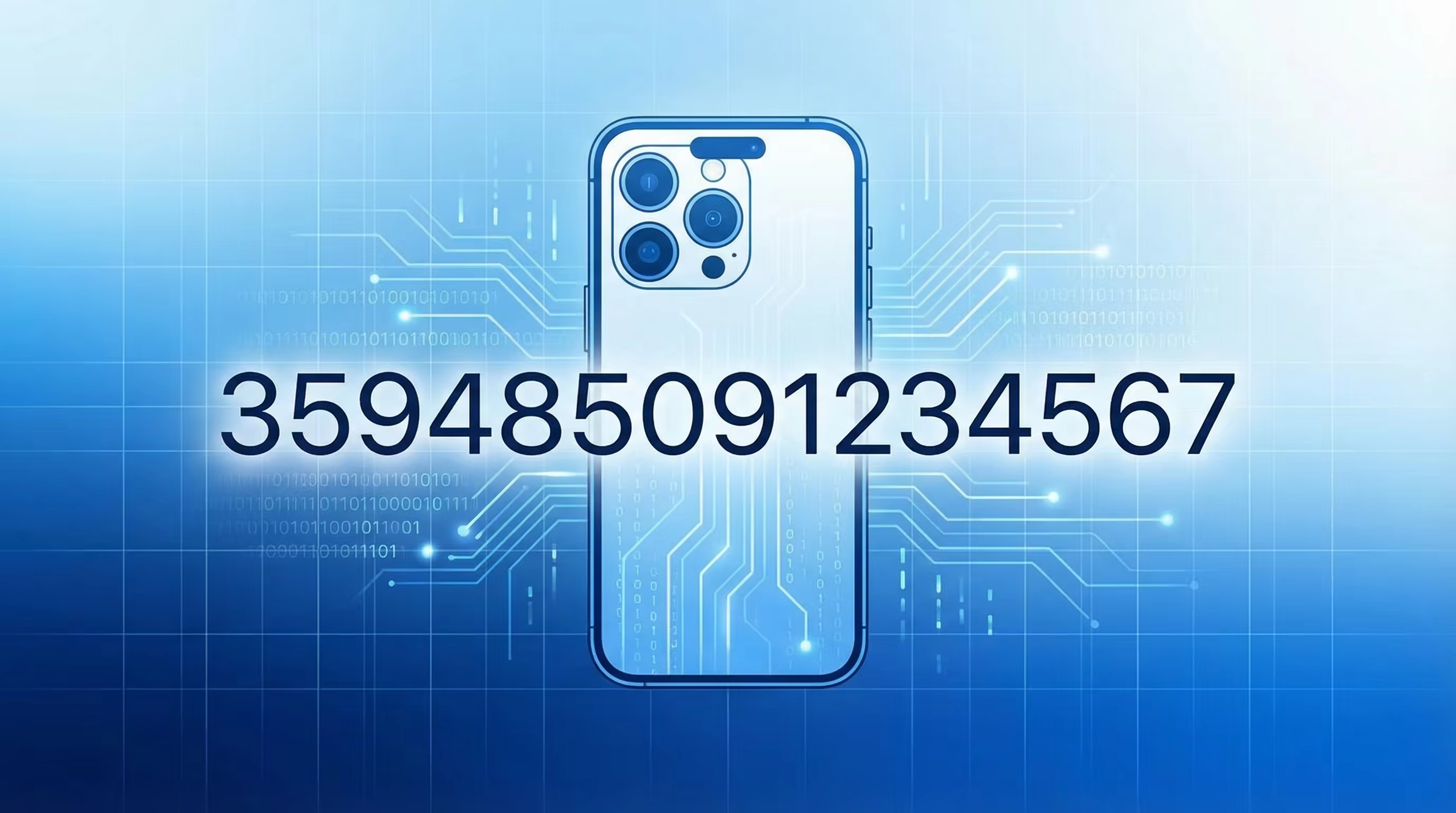
iPhone IMEI Testing Guide: Apple TACs, Luhn and MDM Mocks
Use iPhone-labelled IMEI fixtures, Apple identifiers and MDM mocks for isolated QA. The generator does not verify Apple device identities.
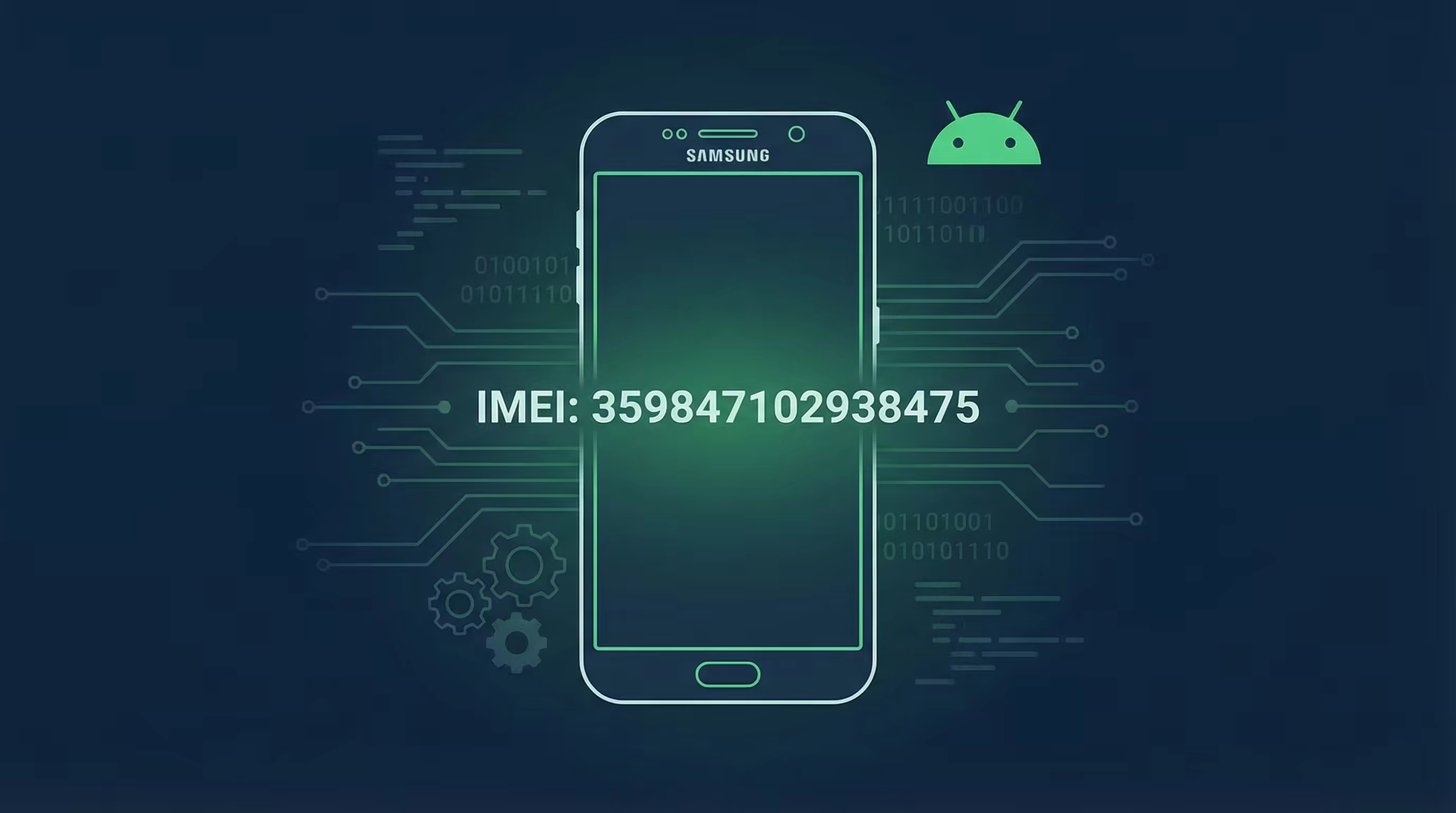
Samsung IMEI Testing Guide: Galaxy TACs, Luhn and Knox Mocks
Use Samsung-labelled IMEI fixtures and Knox mocks for isolated QA. The generator relies on a dated local snapshot, not verified Galaxy identities.
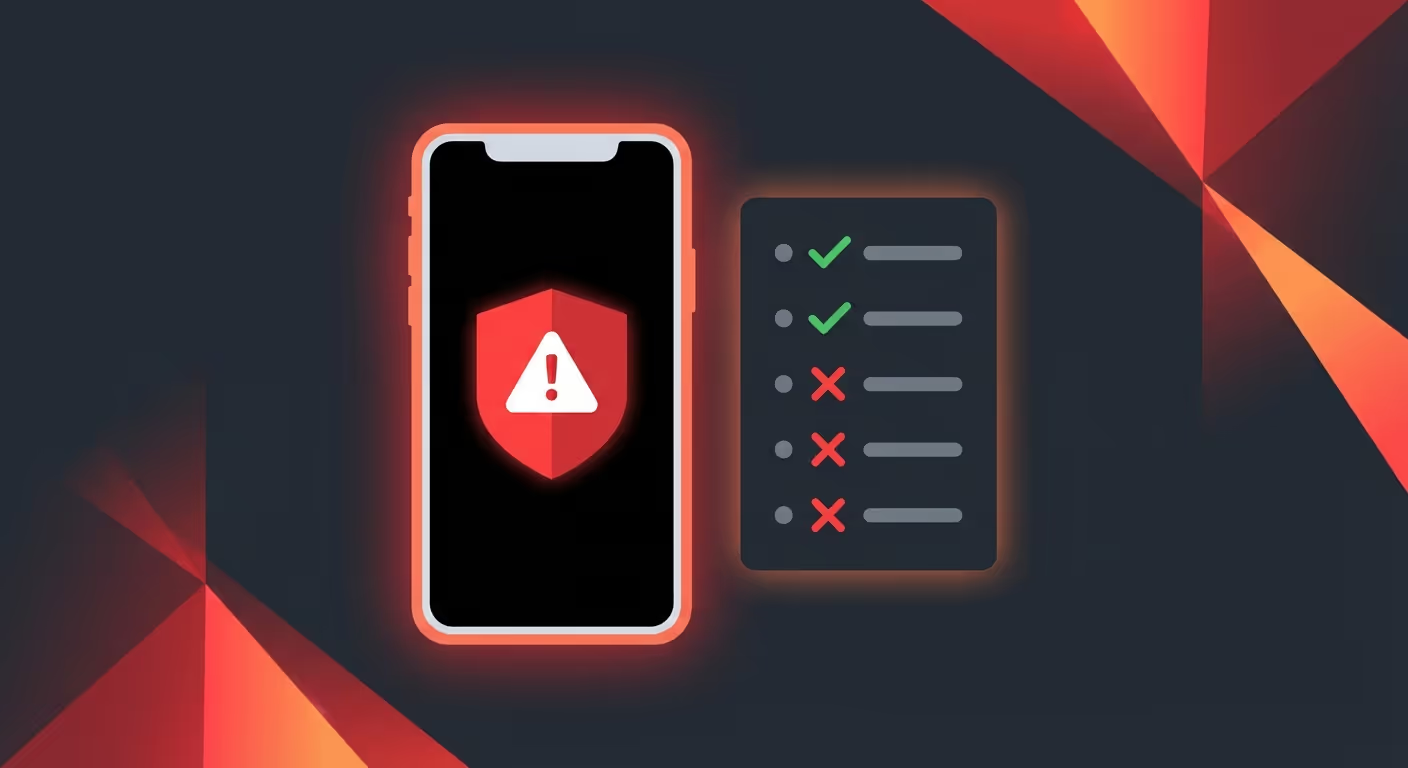
IMEI Blacklist Check Guide: Official Services by Country
Random IMEI does not run a blacklist lookup. Use this guide to find an official or industry-backed service and understand what its result can and cannot prove.
What Is an IMEI? Structure, IMEISV and Luhn Limits
An IMEI identifies cellular equipment. Learn its TAC, serial and check-digit structure, how it differs from SIM identifiers, and what Luhn cannot verify.